Journal
29 October 2026
Reading Time: 5'
The Power of Civil Society: Lessons From Serbia
The recent elections in Serbia mark a historic democratic breakthrough. Behind this result stands an unprecedented wave of civic engagement that has reshaped Serbia’s political future.
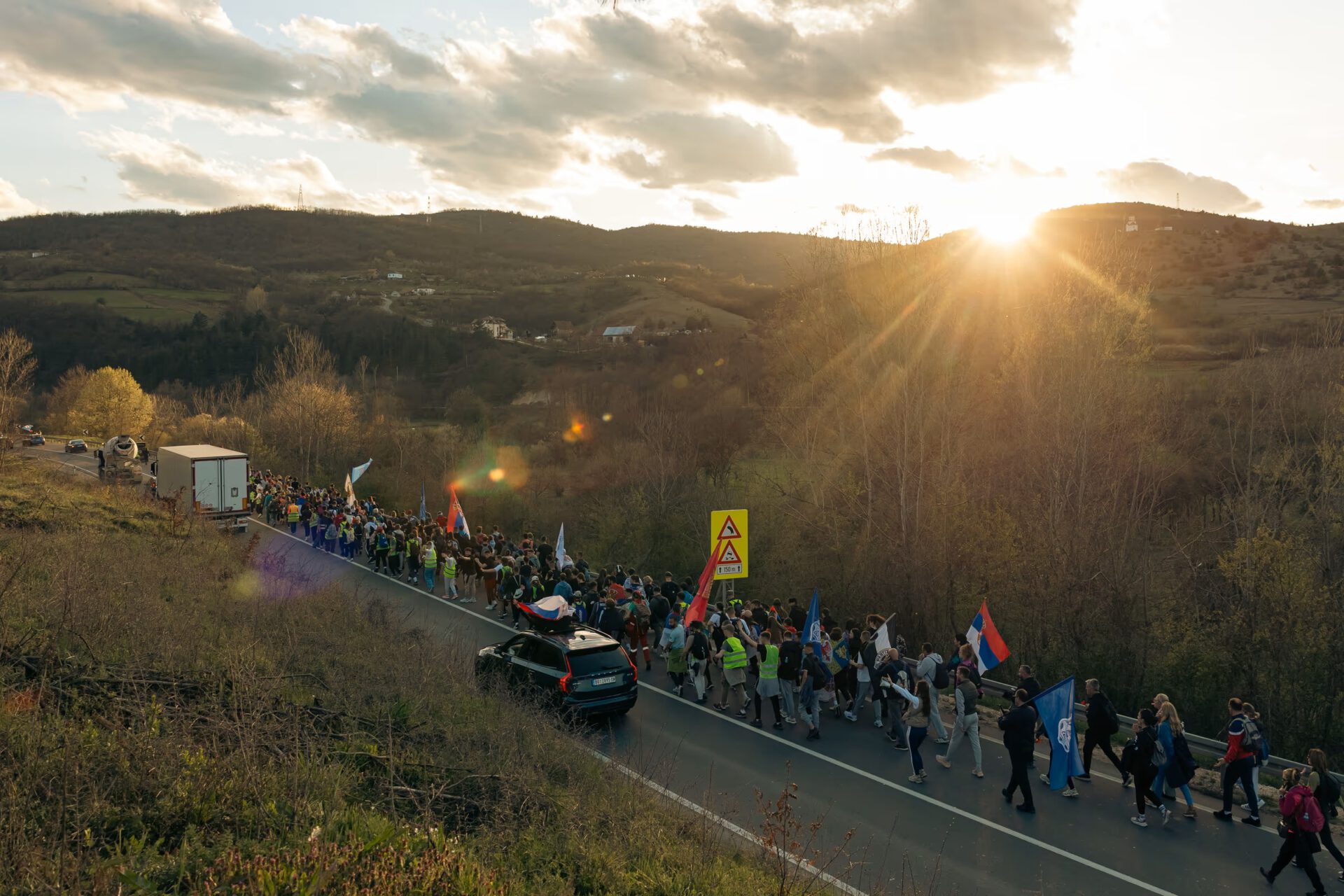
What began as a student-led mobilisation following the tragic collapse of the newly renovated Novi Sad railway station canopy on 1 November 2024 sparked a broad civic movement demanding accountability, transparency, the rule of law and, most importantly, political change. Over time, the movement emerged as the most significant opposition force in Serbia. As the elections approached, many of their core demands remained unresolved, turning the vote into a wider test of democratic responsiveness.
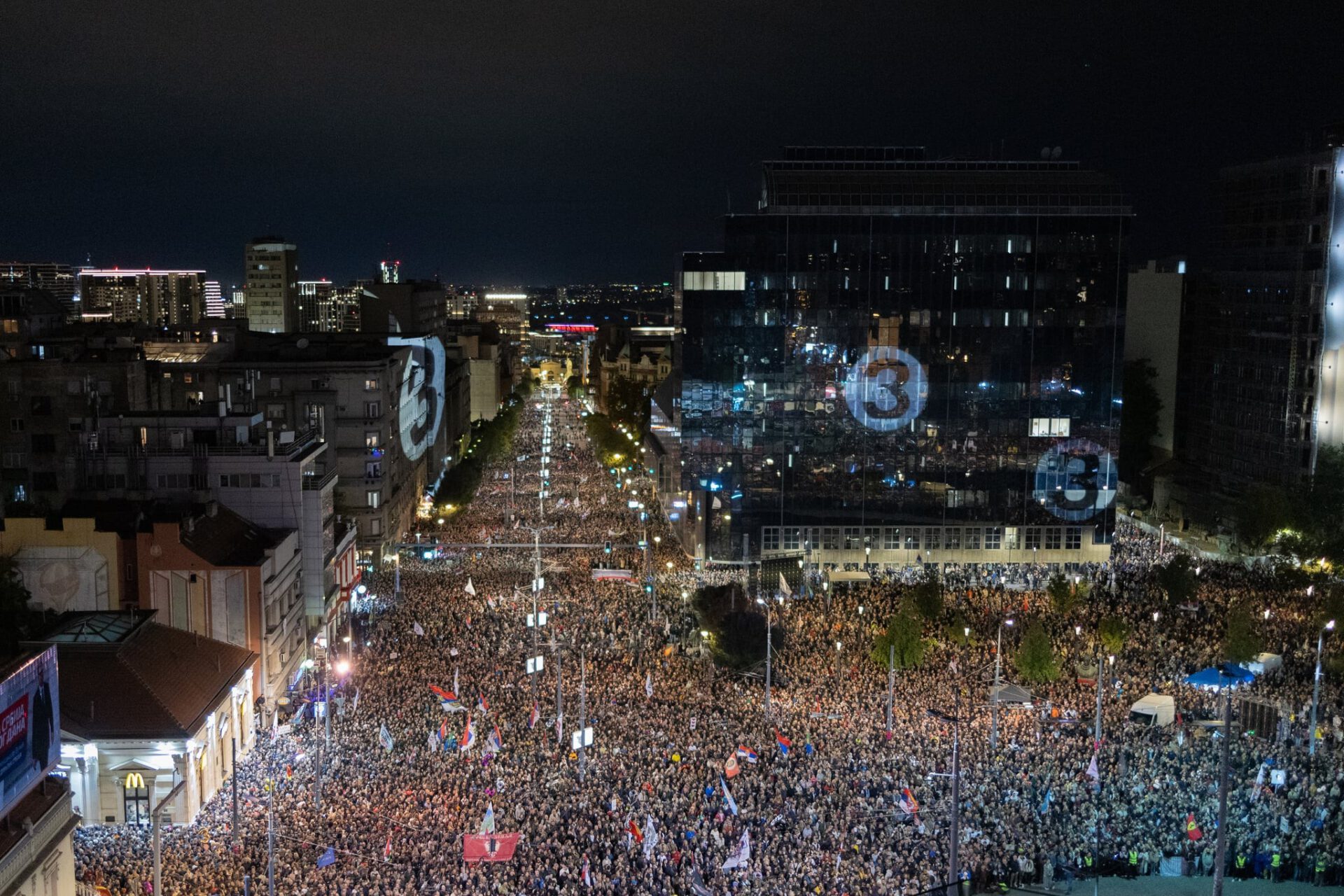
The election campaign unfolded against a backdrop of sustained civic engagement: for nearly two years, students, supported by young people and citizens from diverse social and political backgrounds, organised peaceful demonstrations, local initiatives and public actions that challenged political apathy and demonstrated the power of collective action.
When the country headed to the polls on 25 November 2026, the electoral environment was marked by pressure on activists and observers, allegations of intimidation and surveillance, and persistent questions about the fairness of the electoral process. Independent media faced growing pressure in a media environment where television remained overwhelmingly dominated by pro-government narratives.
And yet, despite this, the movement’s determination and courage renewed hope for change and a democratic future across Serbian society. Turnout reached a historic high. According to preliminary results, the Student List secured 52.71 % of the vote against 39.17 % for the Serbian Progressive Party, thus winning a parliamentary majority. Alexander Vučić’s 14 years in power had come to an end.
This democratic breakthrough carries significance well beyond Serbia’s borders.
Building democracy from the ground up
The elections in Serbia offered a powerful reminder of why democracy matters and how democratic renewal begins. It demonstrated the power of civic participation and offered one of the strongest examples in Europe of how democratic change is built from the ground up.
For nearly two years, a broad, leaderless and non-violent movement, driven by students, united citizens across social and political divides around demands for accountability, dignity and democratic governance. By transforming frustration into collective action, the movement demonstrated that democracy is strongest when citizens believe change is possible and are willing to organise, participate and act together to achieve it.
Civil society has been central to this process. During periods of political pressure, polarisation, and uncertainty, civil society organisations, independent media, local activists, and community leaders often become the guardians of democratic space. They help citizens organise, stay informed, and maintain trust in collective action. Serbia’s recent experience demonstrates that democratic resilience is built long before elections take place, through years of civic engagement, community organising, and the cultivation of local leadership. This offers important lessons for other countries facing entrenched political systems: sustainable change emerges from broad civic ecosystems rather than from individual leaders alone.
Over many years, ERSTE Foundation has sought to strengthen precisely these foundations of democratic resilience in our regions, including Serbia. We have supported organisations promoting civic participation, independent thinking, community development, social innovation, and democratic culture.
Some of the most encouraging developments have been the emergence of new civic leaders, resistant independent media initiatives, stronger local networks, and increased cooperation across sectors and communities. Our approach has evolved from supporting individual projects toward investing in long-term capacities, ecosystems, and partnerships that enable civil society actors to withstand pressure and seize opportunities for change.
Examples of this approach can be found across a range of initiatives that strengthen democratic resilience from the local to the European level: the European Fund for the Balkans (EFB) brings together civic actors, institutions and emerging leaders to advance democratic reform and foster the Western Balkans’ European integration. CAS SEE UNIRI – Center for Advanced Studies promotes critical thinking, cross-border cooperation and dialogue across Southeast Europe, creating opportunities for scholars, practitioners and public intellectuals to engage with questions of reconciliation, democracy and European integration. Reporting Democracy strengthens independent journalism and informed public debate through high-quality reporting in Central, Eastern and Southeastern Europe. Democracy Re:Boot Camp equips a new generation of democratic leaders with the networks, skills and solidarity needed to turn democratic values into collective action.
With deep roots, trusted partnerships and networks, ERSTE Foundation works to strengthen democracy across Central, Eastern and Southeastern Europe. Our work is not party-political. We build, support and connect the institutions, networks and initiatives that help societies remain open, resilient and cohesive. Looking ahead, the priority is to help transform democratic momentum into lasting democratic institutions. Foundations can contribute most by providing long-term support, respecting local ownership, and recognising that democratic transformation is neither linear nor immediate. For ERSTE Foundation, it means constantly adapting our support to local needs and environments, from responding to democratic challenges toward strengthening accountability, participation, and institutional resilience so that progress can be sustained and democracy can thrive.
Header image: Gavrilo Andrić / protesti.pics