Albania
The Albanian Renaissance
A decade ago, thousands of Albanians were fleeing a state that had collapsed into anarchy. Since then, Albania has undergone profound changes. Tirana has been transformed from the bleakest of concrete jungles into a city of colour. While life is still hard for many Albanians, today Albania is one of the youngest and most dynamic societies in Europe.
Albania. The enchanted land
by Adelheid Wölfl*
When Return to Europe reaches Albania, it has a few surprises in store; the country does not at all live up to its negative image. Albania is actually very charming. Its capital, Tirana, has an almost Mediterranean feel. The southern way of life is not only apparent in the faces of the men who bask in the sun, sipping coffee from under white straw hats; it is also reflected in the playful coloured building façades. A few years ago, the mayor had the buildings, made from prefabricated slabs, painted for «political, not artistic reasons».
Edi Rama is an Albanian magician. When he took charge of the city government in 2000 Tirana was like a train station – a place where people were just passing through and did not want to stay. Rama ordered the demolition of the illegal huts on the river Lana. He created new, appealing public spaces. Today visitors to Tirana immediately notice how the citizens have occupied these spaces. People sit outside, playing dominoes, relaxing on the lawns, pushing plastic orange strollers leisurely across the parks or, in the case of children, zooming around on toy cars.
Just twenty years ago, the dictator Enver Hoxha was still in power here. Compared to him, his Romanian counterpart Nicolae Ceauşescu almost seemed a true democrat. This is how the head of the Albanian Media Institute, Remzi Lani, puts it. No South Eastern European country was as isolated; no other state was as brutal towards its citizens as totalitarian Albania. Yet some people living in Hoxha’s Albania were fairly indifferent to the state. The mountain peasants, for instance, whose lifestyle was completely self-sufficient. Return to Europe seeks out these people, who are still living in their own pre-industrial world. As Age Carcu, clad in slippers, fetches in courgettes and beans from her lush green garden, she tells us: «Even if they offered me the entire city of Tirana, I would prefer to stay here.»
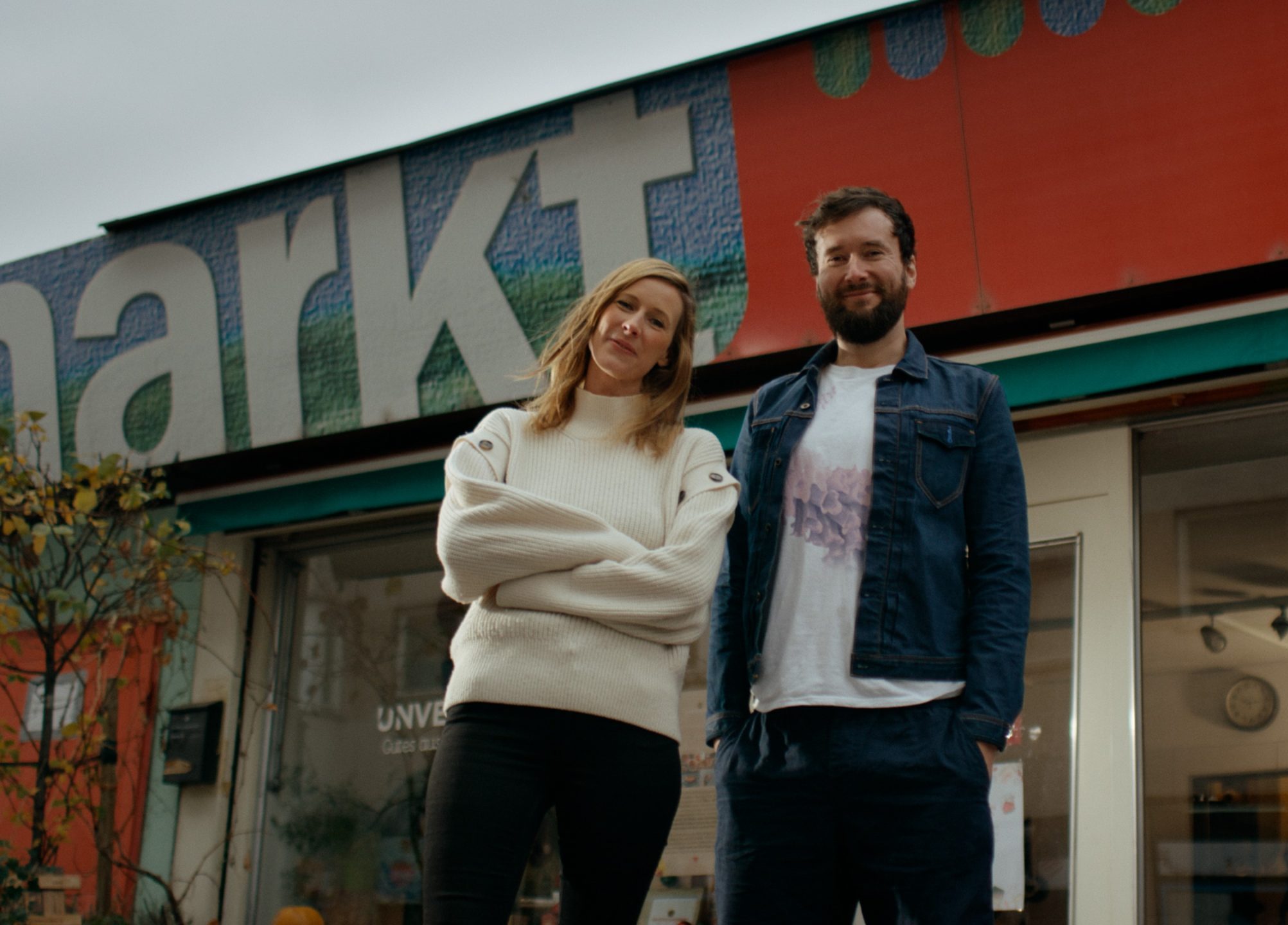
The film traces the tentative attempts of Albanians to get more closely involved with the workings of their state, and documents the transition from anarchy to the rule of law. It shows the people who have been struggling to restore the population’s faith in politics following the collapse of Communism and the harsh days of the 1990s when many Albanians lost all their money in speculative transactions. The citizens’ initiative Mjaft campaigns for higher wages for workers in the chromium mines. The group believes that politicians must be held accountable for their promises and that it is acceptable and desirable to make fun of them. Return to Europe visits the kitchen-cum-living room of the Mjaft family, who within just a few years have succeeded in inspiring moral courage and humour in a country that has been dominated by fear.
The ghettoisation of Albania’s three million inhabitants remains a sad reality. Due to the Schengen restrictions, in many ways their world ends at the Macedonian border. Seen from this perspective, it becomes obvious that the EU is more sceptical about Albania than the Albanians are about the EU.
* permanent member of staff with DER STANDARD
Albania – The Albanian Renaissance
1. Introduction
2. Land of contradictions
3. Exodus
4. Anarchy in Vlora
5. Freedom of movement
6. Albania’s cultural heritage
7. Tirana – city of change
8. Hotel Dajti
9. Albanian Alps
10. Bathora
11. MJAFT!
12. Bulqiza’s mine