Three Questions to Nicholas Watson
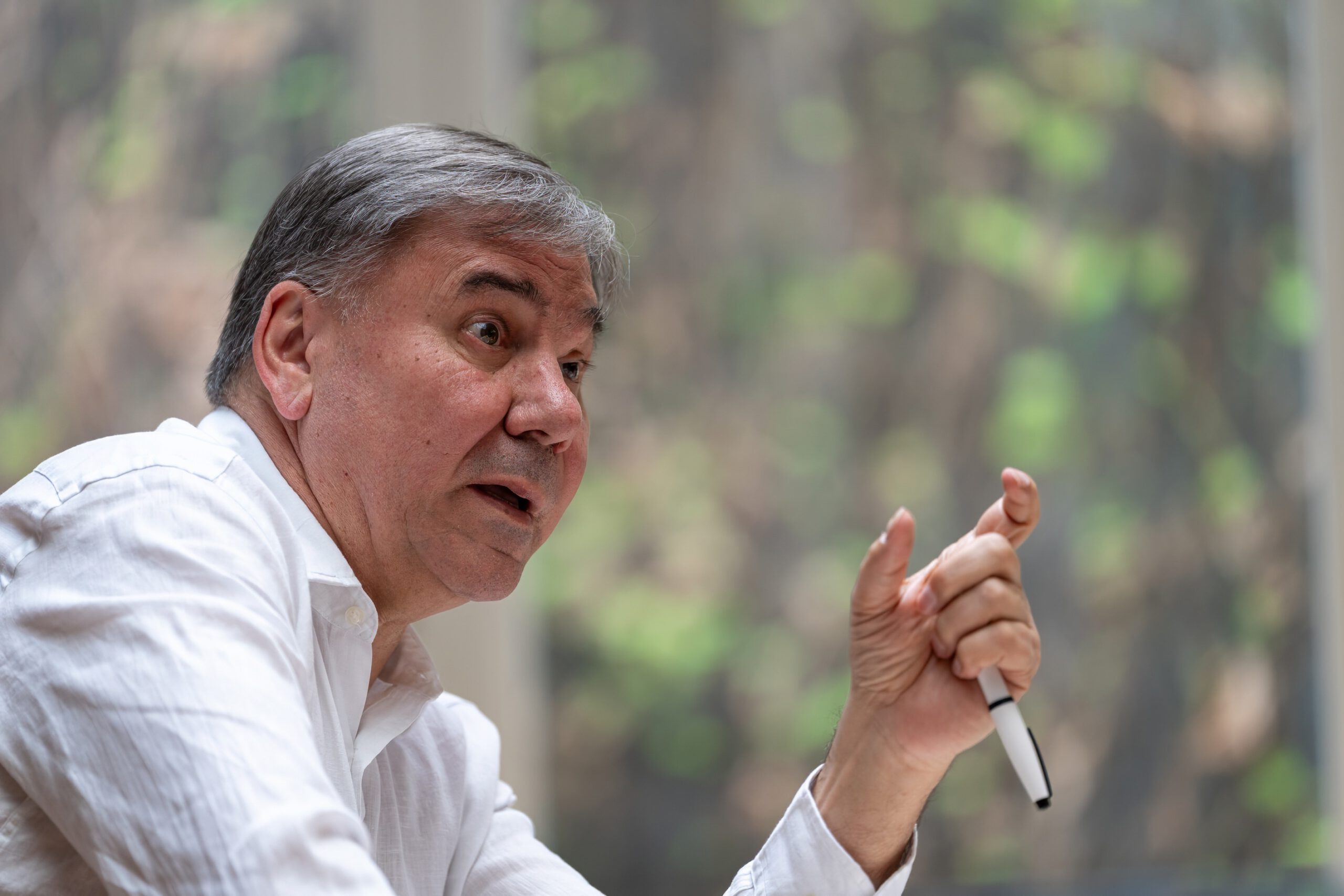
Nicholas Watson has been the editor of BIRN’s Reporting Democracy initiative since 2020. An award-winning journalist, he has worked for almost 30 years in Asia, the US and Europe, writing for publications such as the Financial Times, Politico Europe, TheStreet.com, Axios, International Herald Tribune TV and Knight-Ridder News.
Following the recent mass protests over proposed changes to Czech public service media, we asked him what is at stake and what these developments might mean for the region.
ERSTE Foundation You have lived in Prague and observed media and politics across Central, Eastern and Southeastern Europe for more than 20 years. Did the scale of the protests against the government’s proposed changes to public service media take you by surprise?
Nicholas Watson Yes, it did. I expected a crowd in the tens of thousands, as previous protests organised by »Million Moments for Democracy« have attracted large numbers. But ahead of the demonstration, a survey for Czech Television suggested public opinion was far more divided. Around two-thirds of respondents opposed bringing public service media under state control, yet only about a third supported retaining the current licence-fee model. Views on the protests themselves were almost evenly split.
When we arrived at 2pm, the crowd looked fairly typical for this kind of protest. But it kept growing throughout the afternoon. People came and went, and by the end it was clear the turnout had exceeded expectations. I suspect the organisers’ estimate of 400,000 participants was somewhat generous, but there is no doubt the mobilisation was significant.
»But declining trust in parts of the media does not mean people have stopped valuing independent pluralistic journalism. Rather, many lost confidence in who owned and controlled the media.«
EF Some observers have drawn parallels with developments in Hungary, Slovakia and Serbia. Do you see similarities? And to what extent are these protests really about media freedom, rather than broader concerns about democratic standards and the rule of law?
NW In some respects, yes. One common feature of populist governments across the political spectrum is their intolerance of scrutiny. I think it is okay to take an issue with how something is reported but there is a difference between criticising media coverage and seeking to weaken the institutions that produce it. In Hungary and Slovakia, changes to funding and governance reduced the independence of public service media. Many Czechs see similarities in the current proposals and are concerned, rightly, about where they could lead.
Prime Minister Andrej Babiš and the government reject the suggestions that it wants to »nationalise« public service media, but many critics argue that is beside the point. The concern is less about ownership than about political pressure and reduced editorial independence. Those fears are reinforced by Andrej Babiš’s own record, including allegations of interference in media outlets he previously owned (by his MAFRA publishing group).
The protests were also about more than media policy. Their theme, »4:36«, referred to the early-morning fast-tracking of the bill through parliament, which limited speaking time and set a fixed voting deadline. Czechs worry that this is another example of the government riding roughshod over democratic principles and the rule of law. The speeches and slogans were not only about media reform but about broader anxieties over democratic backsliding.

EF The protests suggest that many people still care deeply about independent media. At the same time, trust in traditional media has declined across much of Europe. How do you explain these seemingly contradictory trends?
NW Media capture and oligarch ownership have been a recurring theme through much of Central Europe’s media landscape since the late 2000s, eroding trust in established outlets. But declining trust in parts of the media does not mean people have stopped valuing independent pluralistic journalism. Rather, many lost confidence in who owned and controlled the media.
One encouraging development has been the emergence of independent and often investigative outlets across Hungary, Czechia, Slovakia and Poland, supported by European institutions and organisations such as ERSTE Foundation. That support proved especially important during periods of intense political pressure.
For public broadcast journalism, the experiences of Czechia and Slovenia are instructive about the risks of delaying action that protect them. Governments that supported democratic norms often failed to strengthen public service media while they had the opportunity. When political majorities changed, those institutions became more vulnerable. Although countries such as Poland and Hungary are now taking steps to rebuild independent public media, it would be far more preferable to protect these institutions before they come under threat.
Header image: APA-Images / AFP / MICHAL CIZEK