Journal
27 July 2026
Reading Time: 5'
Tomorrow’s Entrepreneurs
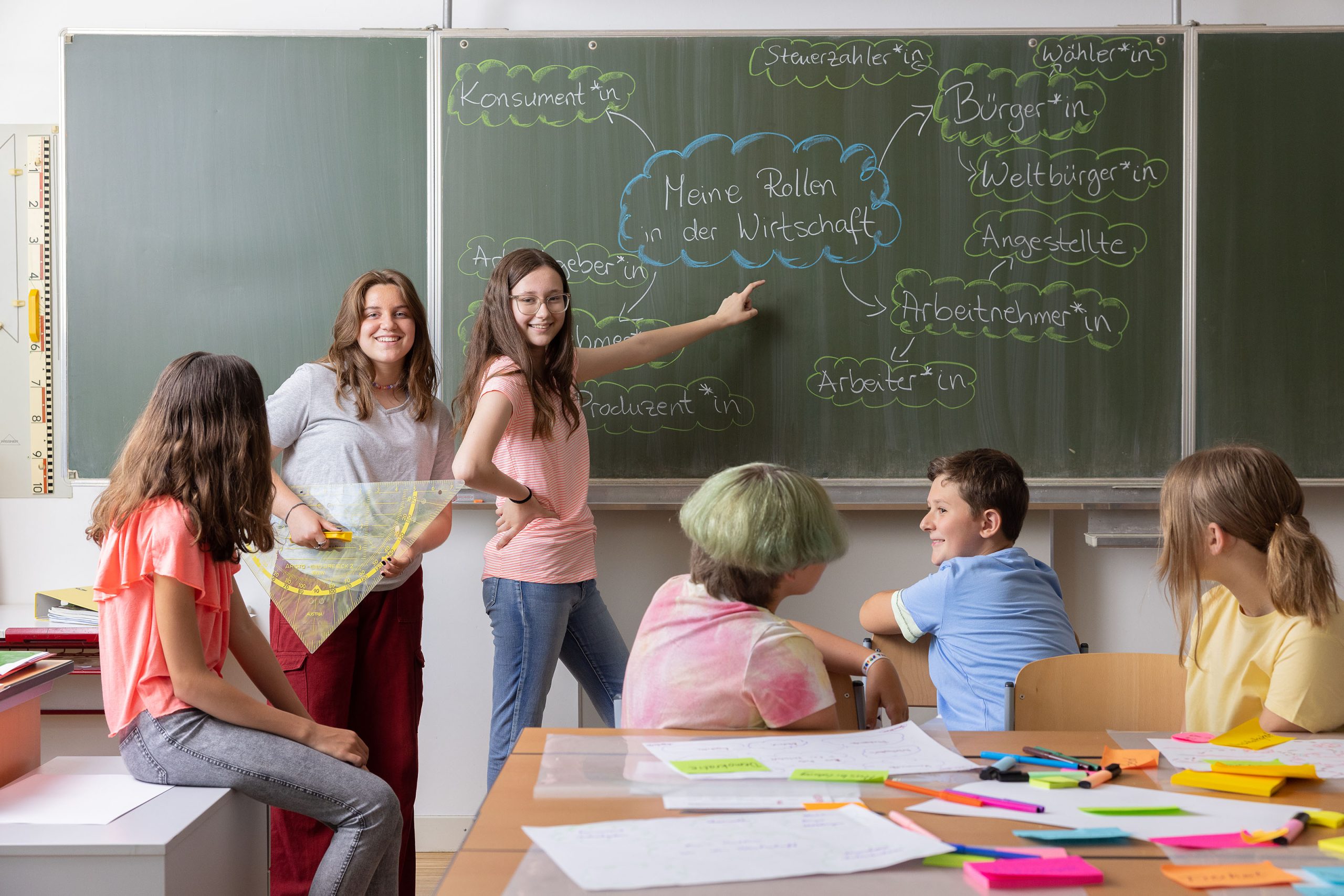
It is ten to nine in the morning; the bell rings, and the pupils of class 3A start their second lesson of the day. While a few kids fiddle with their pens, others take out folders and exercise books from their rucksacks. »Economic Education« is on their timetable on this mild spring day. Just like her pupils, Heidelinde Auer is getting ready to resume a topic she and her class have been working on for the past few months: entrepreneurship. »Who would like to share their idea for a business of their own with the class?« asks the teacher. Pupils in all four rows raise their hands. »I’d develop a drinks vending machine and then sell it,« says a boy in the window row, who, like many of his classmates, is wearing a football shirt. Others can picture themselves setting up their own fruit and vegetable shop, getting into the car trade or starting a transport company.
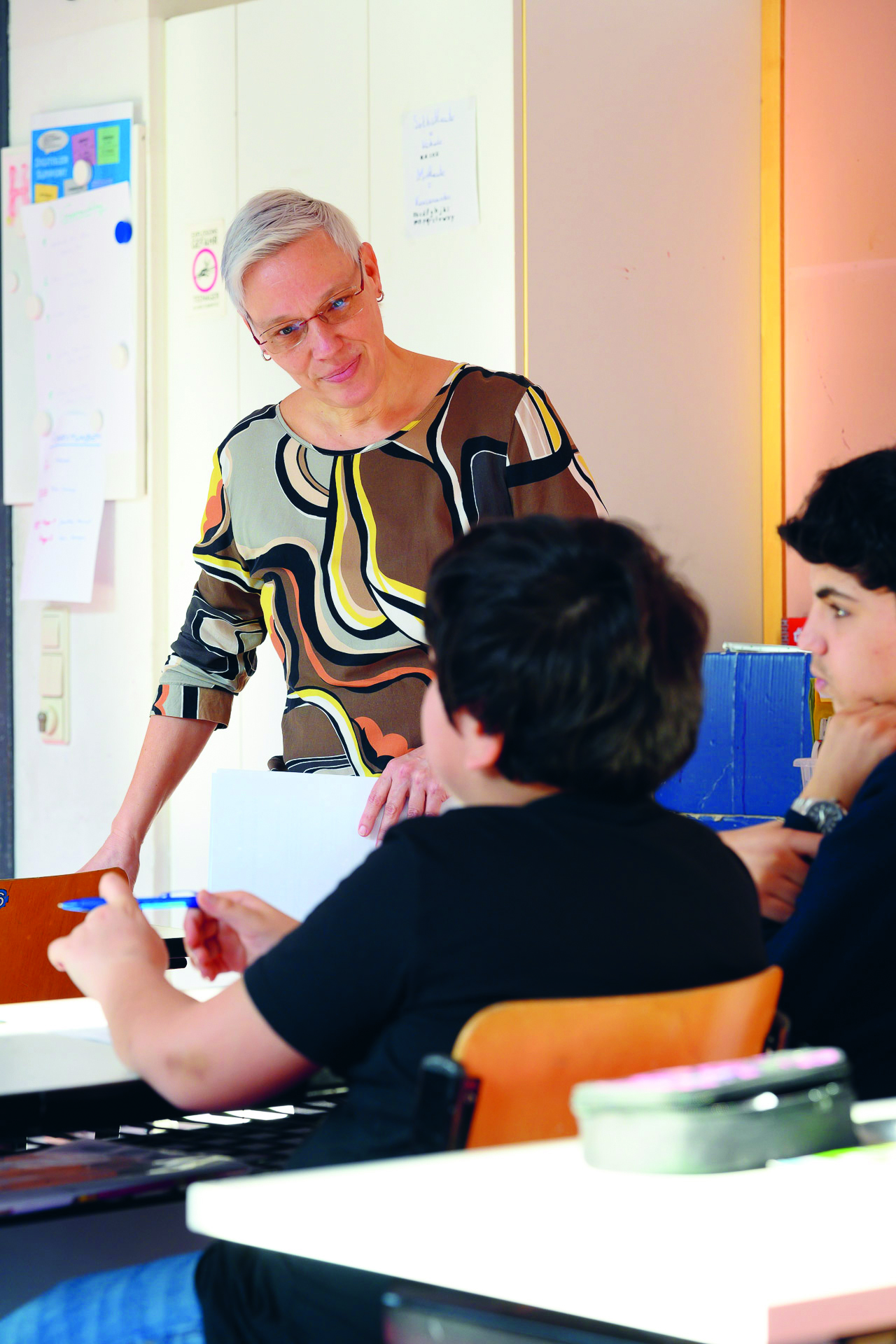
After each suggestion, Heidelinde Auer, a woman in her early 50s, with short hair and glasses, kindly asks them to elaborate, trying to get to the bottom of what lies behind her pupils’ ideas. It’s a warm-up round; the teacher encourages the class to get talking, then it’s back to the subject at hand. Having one hour of economic education per week, this Year 3 class is an exception in the Austrian school system, where basic economic principles are generally taught as part of the geography curriculum.
Kleine Sperlgasse Seconday School in Vienna’s second district adopted an economic focus three years ago. It is also one of 60 compulsory and academic secondary schools in Austria that participate in the »School Pilot for Economic Education«. Within this programme, the Stiftung für Wirtschaftsbildung—backed by a broad civil society alliance including ERSTE Foundation – supports schools with learning materials, training and financial assistance, to equip pupils with the basic knowledge they need to understand connections in the economy: down-to-earth, relevant, interesting. At Kleine Sperlgasse Seconday School, economics is now taught from Year 1 onwards, first integrated, than alternating with geography.
»The pupils love this subject because they quickly realise that they can take away a lot of practical knowledge that will benefit them in their daily lives and that they can also share with their families,« says Auer, while the pupils gather in so-called »buzz groups« to answer the teacher’s questions in groups of four. At the start of the school year, for instance, they discussed at length the responsibilities of the state and why companies and individuals must pay taxes, says Auer. She also regularly invites figures from the business community to talk about their everyday professional lives. »This opens many pupils’ eyes to career opportunities they would otherwise often never
have heard of,« says the teacher.
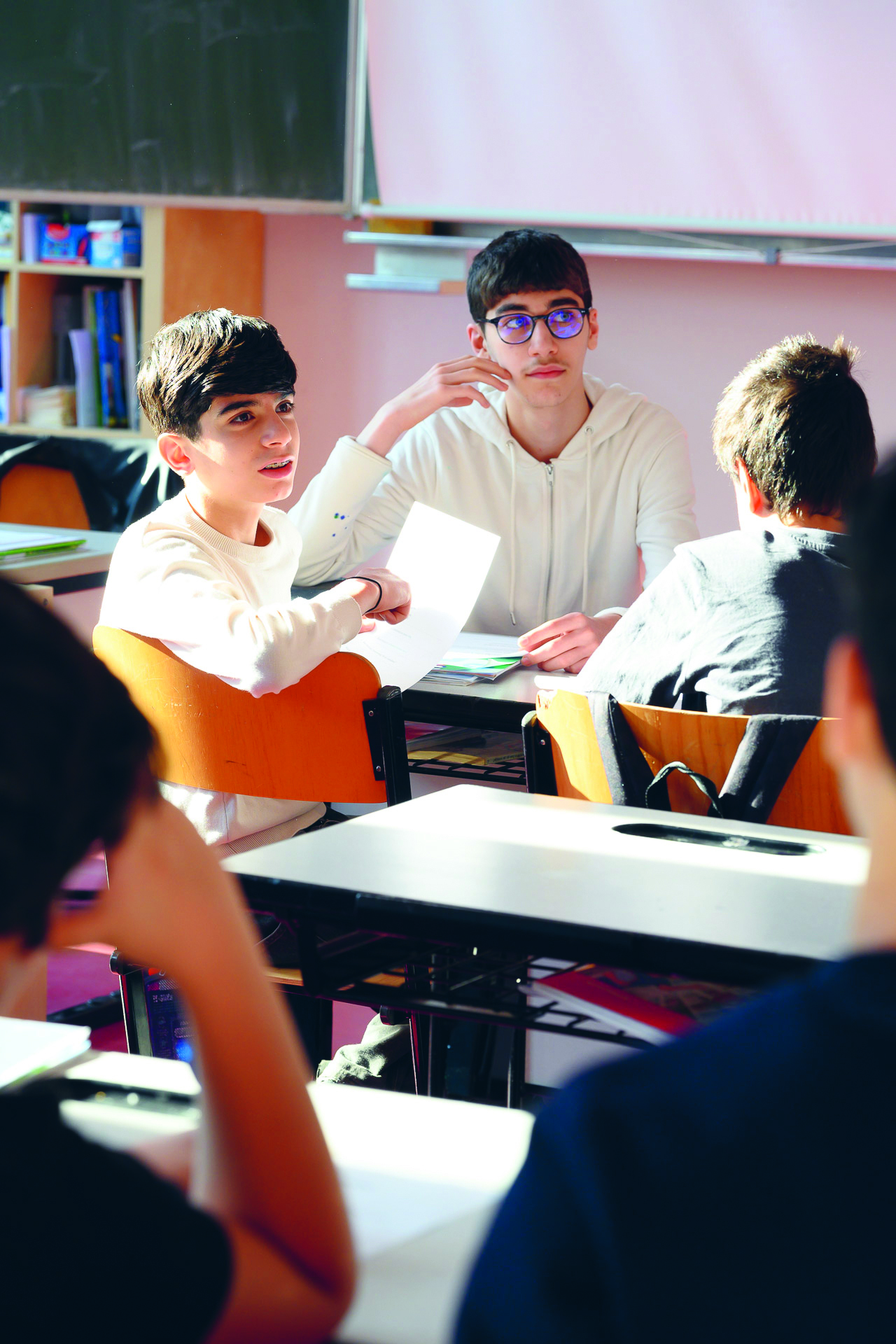
The pupils have finished their assignments. »What responsibilities does an entrepreneur have?« asks Auer, addressing the class, which is still divided into groups of four. »They have to cover production costs, pay their staff and pay taxes,« says a girl in black jeans and a black hoodie. »They have to treat all employees equally and make sure they don’t get hurt,« adds another. »If they don’t make enough money, they can’t pay for all that, so they need to be smart and creative and make good products,« says another kid.
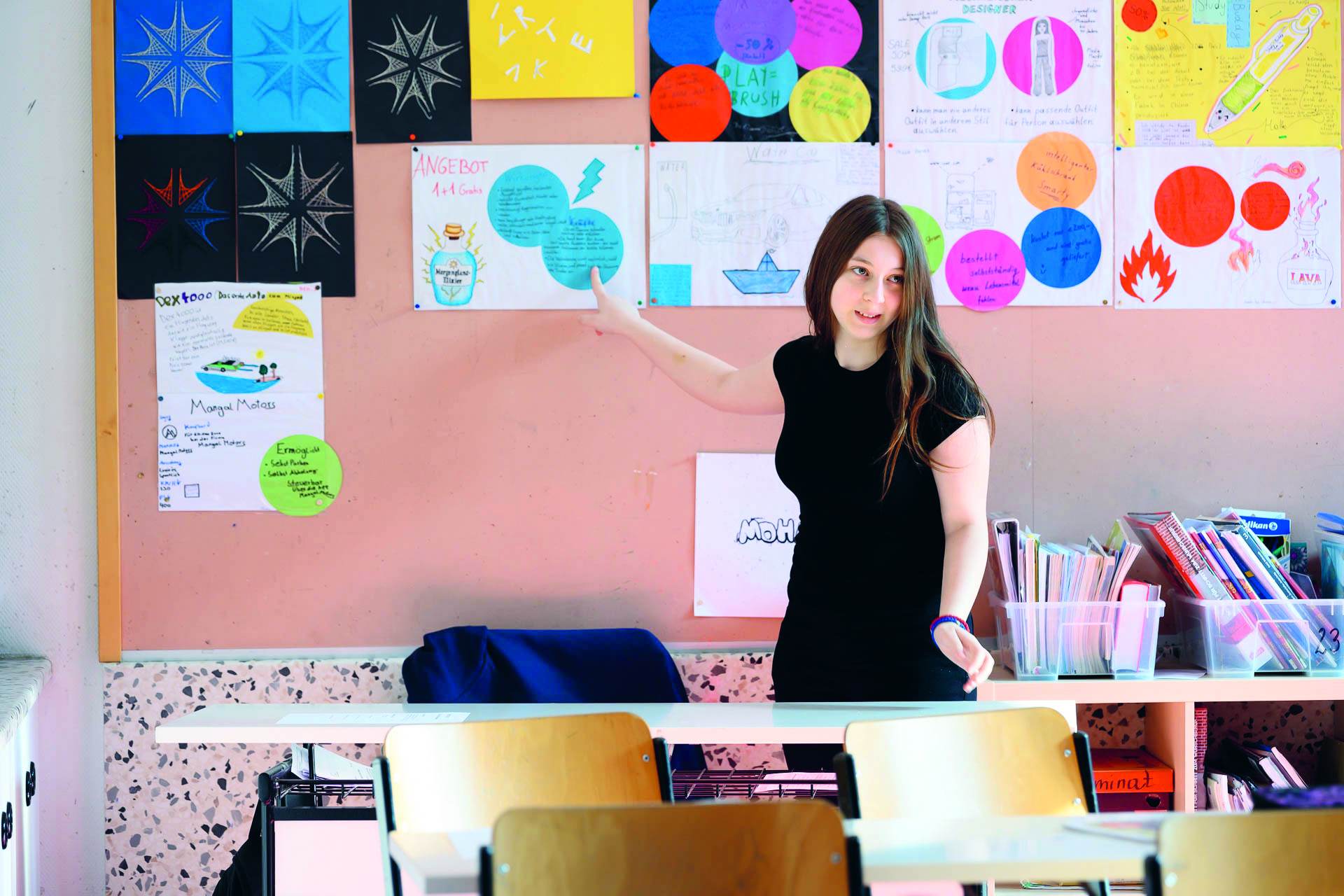
For the teacher, that’s a good cue. A whole row of colourful posters is displayed at the back of the classroom. A few weeks ago, class 3A organised a pitch competition where the pupils were asked to invent products that the world still needs. A girl with long brown hair gets up, walks over to her poster, takes a moment to compose herself, and then, with the confidence of an influencer, presents a cream that not only makes wrinkles and spots disappear but also gives the skin a healthy glow and a natural blush. Next is a boy who has invented a house-cleaning robot that can even climb stairs. Entry-level price: 1,000 euros—peanuts for anyone building their own home. The class applauds.
You can tell that the pupils in class 3A have done this before; they present their ideas with confidence. Time and again, they participate in extra-curricular projects with their teacher. There is something truly inspiring about Heidelinde Auer; by constantly taking a fresh approach to her subject, she is able to instill enthusiasm for it in her pupils. »How does an entrepreneur become successful?« she asks the class as the lesson draws to a close. Many pupils raise their hands; a boy in the back row is called on and says: »When they enjoy what they do as much as a hobby.« A statement many entrepreneurs are likely to agree with.
Photographs: eSel.at / Joanna Pianka