Journal
5 October 2026
Reading Time: 7'
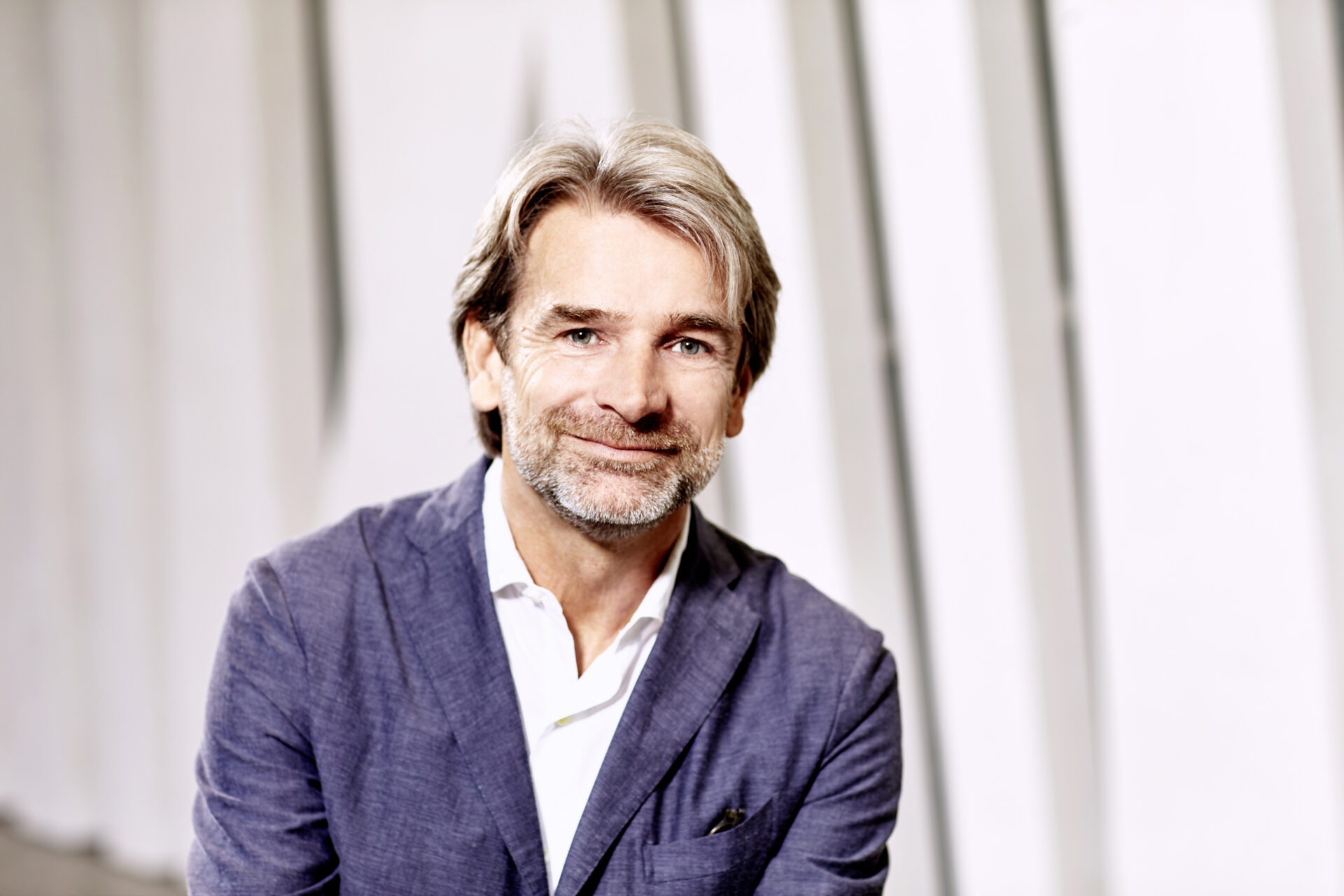
In Memory of Boris
It is with profound sadness that we share the news of the passing of Boris Marte, who has left us far too soon.
He helped to establish ERSTE Foundation as well as so many initiatives that have shaped civil society in Austria and Central and Eastern Europe. For over 10 years, he served as ERSTE Foundation’s CEO, but in this as well as all his other roles he was dedicated to something much greater: a strong civil society and a free and united Europe.
The impulses Boris has given us are countless, the networks he has built are made to endure and the impact he has left is indelible. He was an inspiration to everyone who worked with him, he believed in big ideas, but believed even more in people: He demonstrated time and again that with the right crowd at the right time, in the right place, that change IS possible.
We have lost a visionary, a colleague and a friend. We have lost a fighter and a champion of the greater good. Our thoughts are with his family, and everyone close to him. Together, we will honour his memory.
For those wishing to pay their respects, a book of condolences will be available at the ERSTE Foundation (Am Belvedere 1, 1100 Vienna) from Wednesday, 7 October. The book of condolences will be accessible Monday to Thursday from 10:00 to 17:00 and on Friday until 14:00.
In Memory of Boris
by Andreas Treichl
May 13 of this year was a beautiful and unusually warm spring day. Hundreds of people had been gathering at Vienna’s Judenplatz for more than an hour and had begun whispering among themselves after Anne Applebaum concluded her »Speech to Europe«. Then Boris stepped onto the stage once again. He had welcomed and introduced her earlier. He referred briefly to what she had said, only for a few moments, and then he began to breathe deeply and audibly. Once. Twice. Three times. With his hands he invited the audience to join him: do as I do, breathe with me.
Not many followed. A little saddened, he stepped off the stage.
On that day, Boris knew something most of us were not yet prepared to face. He knew that this would, in all likelihood, be his final appearance at »Speech to Europe« on Judenplatz. He knew that he could fight his tumor, but that he would not defeat it.
»Speech to Europe« was Boris’s idea. He conceived it in 2018 and launched it on Europe Day in 2019, with Timothy Snyder as its first speaker. He created it specifically for Judenplatz and for the Memorial, which would not exist in its present form without him. It was Boris Marte who brought to completion, during its decisive years from 1998 to 2000, the Memorial initiated by Simon Wiesenthal and designed by Rachel Whiteread. Boris insisted that remembrance of the Shoah be connected to the long history of Jewish persecution in Vienna, without ever diminishing the singularity of the Holocaust itself. That is why the Memorial is linked so closely to the archaeological excavations beneath it.
Long before that, Boris had immersed himself in questions of remembrance and Austria’s confrontation with its National Socialist past. He did not want to create another place of prescribed memory. He wanted a place where remembrance would come from within people themselves, from below rather than from above. Against considerable resistance, he succeeded. Eighteen years later, through Speech to Europe, he succeeded again by connecting the memory of the Holocaust with the responsibility of today’s generations for Europe’s future and for the values that define it.
And this year, standing on that stage after Anne Applebaum had spoken, he wanted to remind us of exactly that. His deep breathing carried a simple message. If we learn from history, we can build a wonderful and peaceful Europe.
Boris thought deeply and broadly. He reached far into the past and dreamed far into the future. At times, people lost their way in the complexity of his thinking. But once they caught up with him again, he always won them back. He worked closely with political leaders such as Erhard Busek and Peter Marboe, and over the years became one of the most important figures in Austria’s cultural life.
That is also why I brought him into our group twenty-five years ago. We had just acquired the largest banks in the Czech Republic and Slovakia, and I was looking for someone to lead our corporate sponsorship activities. Because Boris was Boris, it quickly became clear that this would become something much bigger.
And it did. In 2002, Boris founded tranzit, our network of independent galleries across Central and Eastern Europe. In 2003, we founded ERSTE Foundation. In 2004 came the Kontakt Collection. In 2006, the Zweite Sparkasse. In 2007, we embarked on an extraordinary urban renewal project on the grounds of Vienna’s former Südbahnhof: museums, market halls, concert halls, a pedestrian connection from the Belvedere across the Gürtel into the Schweizergarten, and the Erste Campus. The financial crisis and the complete lack of interest on the part of the City of Vienna left only the Campus standing. Yet even that continues to fill us with pride and joy today. In its unique openness and accessibility, it would not exist without Boris Marte.
After the years of acquisitions and the financial crisis, 2012 marked the beginning of a new chapter: renewal. Many of our competitors bought fintech companies to acquire digital expertise and capacity. We decided to build it ourselves. It was a bold decision at a time when the aftermath of the financial crisis was still weighing heavily on us. The result was George, today the most successful digital banking platform in Austria and, meanwhile, across much of Central Europe. Boris was there from the very beginning and played a leading role throughout. Then came FLiP, unimaginable without him and now present in many countries.
There is hardly anything that makes this group different from others that does not carry Boris’ signature.
Boris worked for the Bank and for the Foundation, sometimes one after the other, but usually both at the same time. In between, together with Marianne, he raised their children. Rarely did one see exhaustion in him. Rarely could one hear it in his voice. Whenever fatigue threatened to catch up with him, he seemed to wipe it away with a new idea.
And he always had new ideas.
They never stopped coming.
What made Boris truly exceptional was that he never thought only about Erste. He always thought about society. About a free, democratic and resilient civil society. About education. About inclusion. His work and his thinking were always directed towards something larger than any institution. He possessed an unbreakable conviction and fought for a society that, sadly, remains further away than we would like to admit.
Now he is no longer here.
Not for Marianne, not for his children, not for his family, not for his friends, not for ERSTE Foundation, not for Erste Group. And not for me, with whom Boris spent more than half of his adult life working, laughing, arguing, dreaming and celebrating.
He is no longer here.
But he has left us so much that he will remain with us forever.
Andreas Treichl