ERSTE Stiftung

Culture

The Culture programme of ERSTE Foundation aims to research and document mutual relationships and different practices in the life and culture of Central and South Eastern Europe, delving into the different political geographies. ERSTE Foundation intends to promote an understanding for and knowledge about a differently lived past, which can facilitate a shared present and future. At historical turning points, stories and documents of time emerge, and it is the concern of ERSTE Foundation to chronicle these.
The two main themes of the programme are:

LINKS_Promoting and communicating contemporary culture

LINKS is to support self-initiatives and independent projects for intellectual debate and a lively contemporary culture. LINKS supports structures and builds up networks. Particular emphasis is given to the promotion of contemporary art, culture and literature. The important issue is to collaborate as directly as possible with local partners who are familiar with the local needs.

PATTERNS_Researching and understanding recent cultural history

PATTERNS is a transnational programme that aims to research and understand recent cultural history. PATTERNS initiates, commissions and supports contemporary culture projects in a variety of formats and media. The programme focuses on the visual arts and culture of the 1960s until today.

PATTERNS Advisory Panel:
Cosmin Costinas (curator, bak - basis voor actuele kunst, Utrecht)
Veronica Kaup-Hasler (director of steirischer herbst, Graz)
Piotr Piotrowski (art historian, Poznan)
Georg Schöllhammer (editor of “springerin” and “documenta 12 magazines”, Vienna)


  • PATTERNS_Lectures: Call to submit proposals for university courses

    Are you a lecturer at a public university in Central or South Eastern Europe? The call kicks off a new, joint project of ERSTE Foundation and WUS Austria, which aims at encouraging the development of new university courses in the fields of art history, cultural studies and cultural sciences. 

  • Gender Check. Femininity and Masculinity in the Art of Eastern Europe

    19 March - 13 June 2010
    Zacheta National Gallery of Art, Warsaw, Poland

    After closing its doors at the Museum Moderner Kunst Stiftung Ludwig Wien (MUMOK), Gender Check moves to Warsaw, where it will be re-opened at Zacheta National Gallery of Art on 19 March 2010. Check out the details at www.gender-check.at!

  • Balkanology. New architecture and urban phenomena

    22 October 2009 – 18 January 2010, Architekturzentrum Wien

    An exhibition in cooperation with S AM – Swiss Museum of Architecture, Basel.
    In the Western Balkans the collapse of the socialist economic system in former Yugoslavia and Albania has given rise to extensive informal building activity that represents a new form of urbanisation. The question is: to what extent do such urban transformations indicate patterns of future development for European cities in general?

  • Good Luck! Migration Today - Perspectives from Vienna, Belgrade, Zagreb and Istanbul

    Linked by the Austrian government's policy to recruit workers from Croatia, Serbia and Turkey in the 1960s, these four countries experienced new migratory movements in the last 20 years. Former classical emigration countries such as Turkey and former Yugoslavia have become immigration destinations as well, as is vividly proven by Belgrade's Chinese community and Moldavian nurses in Istanbul.
    The project "Good Luck!" looks at migratory movements and policies in Austria, Croatia, Serbia and Turkey since the late 1980s and their cultural and economic aftermath.

  • Monument to Transformation

    28 May - 30 August 2009, The City Gallery of Prague
     
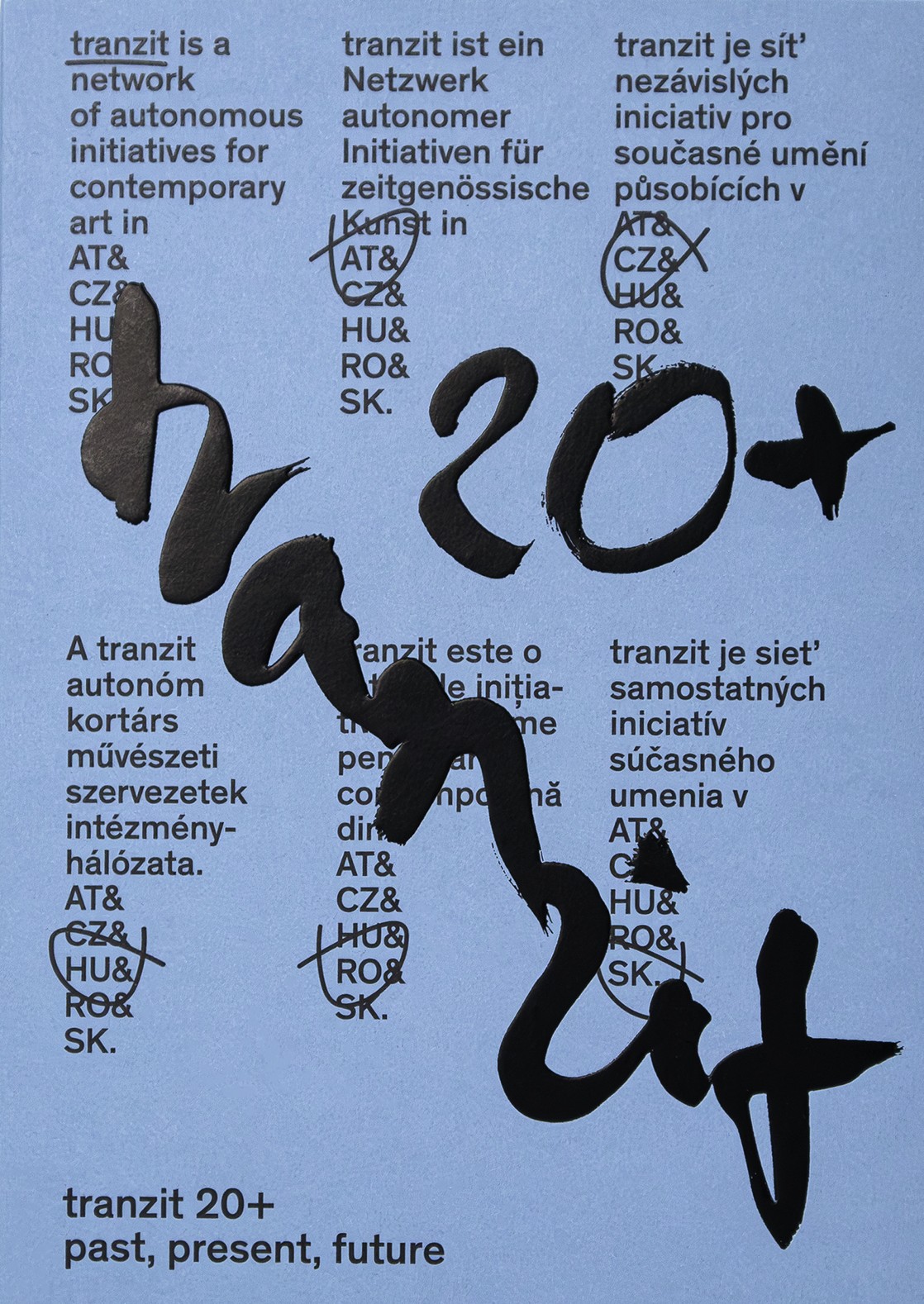
    Monument to Transformation summarises two and a half years of exhibitions, discussions, works of art, texts and events which have occurred or were initiated by tranzit.cz. The installation will be made up of works of art, archival materials, videos, texts and will create a unique environment for intellectual reflection on the topic: What happened to us in the last 20 years?


  • Igor Zabel Award for Culture and Theory

    The Igor Zabel Award for Culture and Theory acknowledges a cultural protagonist whose work is dedicated to broadening international knowledge of Central and South Eastern European visual culture. The laureate is selected by a renowned international committee of experts.


  • PATTERNS_Call for Submissions 2008

    PATTERNS is a transnational programme that aims to research and understand recent cultural history. PATTERNS initiates, commissions and supports contemporary culture projects in a variety of formats and media.
    The call addressed projects in Central and South Eastern Europe that share PATTERNS' areas of interest. 37 projects were selected out of around 150 applications. Most of them will be realised in 2009 and 2010.

  • Paul Celan Fellowships for Translators

    2010/2011 Call for Applications open!

    This fellowship programme of the Institute of Human Sciences in Vienna provides translations of significant works in the field of humanities and social sciences into languages of the Central and South Eastern European region. It bears the name of the author and translator Paul Celan, who´s work – probably more than any other in the 20th century – is based on the diversity of European cultures and in the same time arbitrates between them.

  • Romanian Online Books in Print Catalogue

    Many people in Romania do not know whether a book they are searching for exists and if yes, where it can be found. The Romanian Online Books in Print (BIP) catalogue is the answer to this problem.

  • The Diversity Report on Books and Translation

    Europe is growing together not only economically but culturally, too. As globalisation pervades our cultures and cultural scenes, the number of book translations is experiencing a steady decline. Until a few years ago it was barely possible to precisely estimate the degree of cultural diversity due to a lack of pertinent data. Now the Diversity Report aims to develop an overall picture of the current situation.

  • Impulse

    Impulse is an art project curated by the art historian Franziska Lesák and is concerned with the tool of the interview. 

  • Land of Human Rights - five-part poster campaign

    Violations of human rights occur on a daily basis in Europe, a fact that the general public is often not aware of. The aim of the Land of Human Rights project thus is to throw light on the current situation of human rights in Europe from a visual arts perspective. An integral component of this project is a five-part poster campaign that broaches current human rights issues through the use of images and texts in various languages.

to archived Projects

We believe in culture as a driving force for an open society, and in its ability to forge links between diverse linguistic and geographical regions. We research and document the culture of Central and South Eastern Europe, because we believe that promoting knowledge and understanding helps to create a positive, shared future. We also initiate and support contemporary cultural production.

Featured Project

Gender Check. Femininity and Masculinity in the Art of Eastern Europe

19 March - 13 June 2010
Zacheta National Gallery of Art, Warsaw, Poland

After closing its doors at the Museum Moderner Kunst Stiftung Ludwig Wien (MUMOK), Gender Check moves to Warsaw, where it will be re-opened at Zacheta National Gallery of Art on 19 March 2010. Check out the details at www.gender-check.at!