Journal
24 February 2026
Reading Time: 4'
Three questions to Katia Denysova
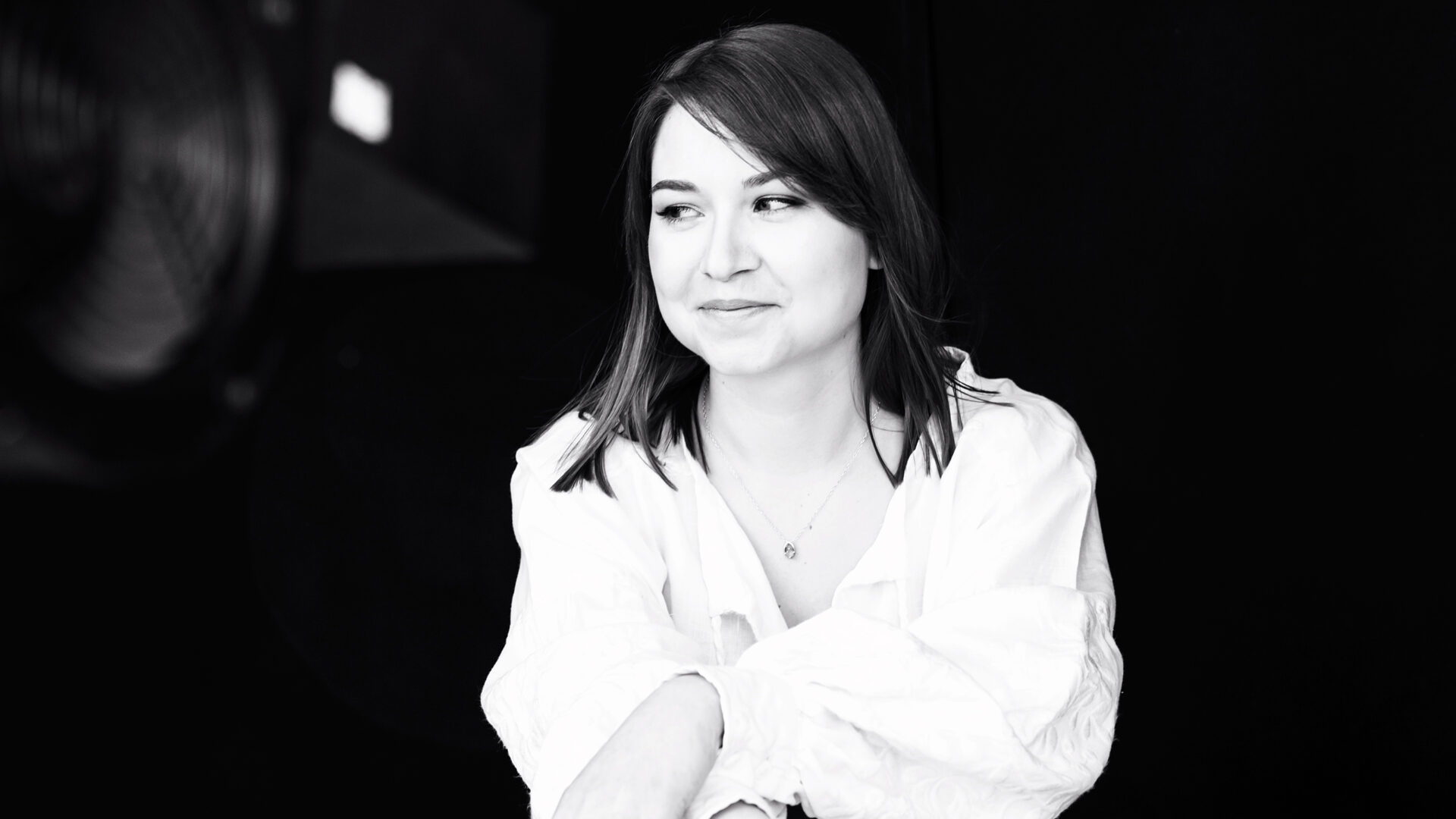
Katia Denysova is an art historian and curator specialising in Ukraine’s modernist art. She is the co-curator of the travelling exhibition »In the Eye of the Storm: Modernism in Ukraine, 1900–1930s« that won the 2023 Apollo Exhibition of the Year Award and was shown at the Belvedere in Vienna in 2024. Denysova also co-edited and contributed to the accompanying catalogue, published by Thames & Hudson in 2022. She defended her PhD at the Courtauld Institute of Art in London in 2024 and holds a postdoctoral position at the University of Tübingen in Germany. She is based in Vienna until April 2026 as a Lesia Ukraїnka Junior Visiting Fellow at the Institute for Human Sciences (IWM).
ERSTE Foundation In Ukraine, artworks are being looted or destroyed – not only in museums, but also in public space, including monuments – putting cultural identity and institutional memory at risk. How can curators and cultural institutions act responsibly in moments of acute crisis without locking heritage into narratives of damage, victimhood, or nationalism?
Katia Denysova I believe that responsibility is about agency. Despite the damage, ruination, and physical removal inflicted by the Russian Federation upon our cultural heritage, Ukrainians carry on producing creative output of high quality and immense pertinence, both inside Ukraine for a domestic audience and internationally. With numerous art exhibitions, theatre performances, documentary and feature films, new book releases and translations, Ukrainian culture does not merely survive but continues as a living entity and an active force of resistance, thus defying narratives of victimhood and loss.
»Ukrainian culture does not merely survive but continues as a living entity and an active force of resistance, thus defying narratives of victimhood and loss.«
EF How can cultural discourse maintain critical distance in times of war and where, for you, is the red line beyond which interpretation turns into appropriation?
KD It is challenging to discuss critical distance when so much is at stake. Since the start of the full-scale invasion in 2022, the Russian Federation has killed at least 263 Ukrainian cultural workers and damaged or destroyed more than 500 cultural sites. And this is not a new story: various iterations of the Russian imperial regime killed our artists and writers, annihilating their work and erasing their names from official records. However, Ukrainians are aware that this toolkit has been applied to other nations, and that we are not alone in this struggle. Because of this, preserving our culture and reclaiming what has been expunged and negated over the centuries and in recent years is as much about Ukrainian culture as it is about solidarity, the celebration of Ukraine’s multiculturalism, and the common struggle against Russian imperialism.
EF How would you describe the conditions under which artists and cultural workers are currently forced to work and produce and what do these conditions change in the meaning or function of artistic practice today?
KD This has been the toughest winter of the full-scale war so far, with relentless Russian mass attacks that have ruined Ukraine’s power infrastructure, resulting in extreme electricity and heating outages, which Ukrainians endured while temperatures dropped to -20 °C outside. Yet, if you visit Kyiv, Kharkiv, Lviv, or Odesa, cultural life thrives, powered by ubiquitous generators and fuelled by Ukrainians’ creative drive. Theatres and stand-up shows are packed night after night, hundreds attend exhibition openings and poetry readings, new films are released, and bookshops remain open. In Ukraine, culture functions not as a privilege or pastime, but as a means of adapting and resisting. Culture has also become about documenting: bearing witness to death and loss, the grief and anger that come with it, the »new normal« forced upon Ukrainians and the exhaustion it produces, the truth, and our dignity.